
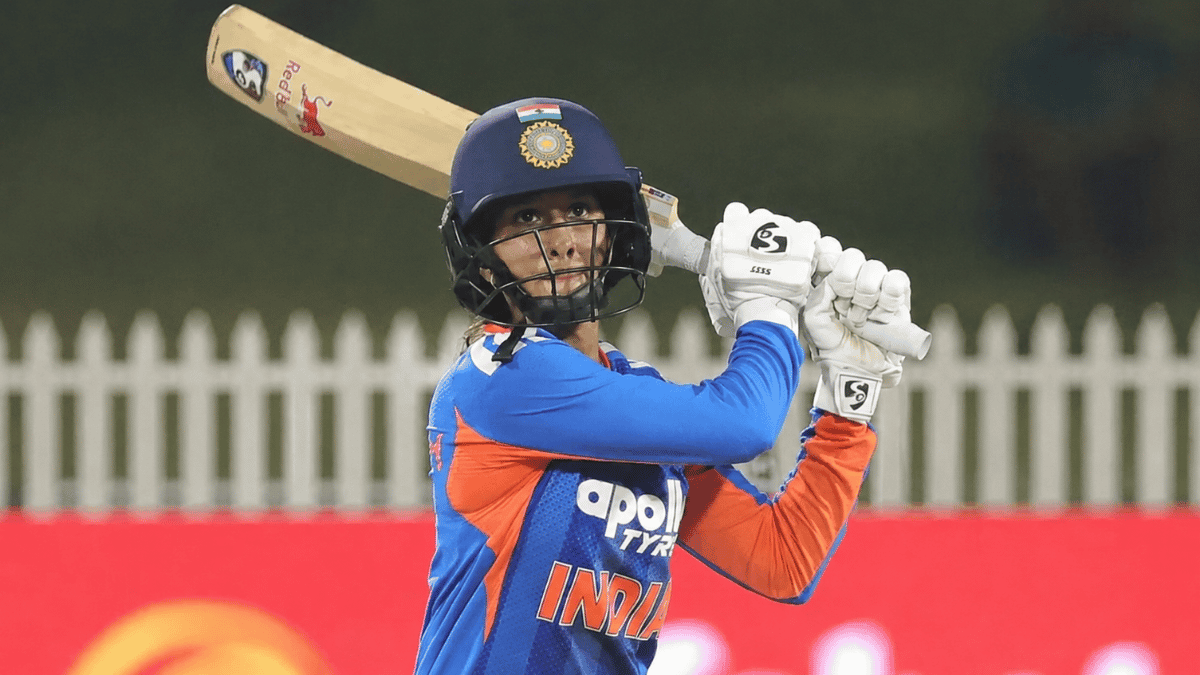
India head into their T20 World Cup group-stage clash against South Africa on Sunday at Old Trafford with a perfect record of two wins from two games, yet questions linger over one of their most experienced middle-order batters. Jemimah Rodrigues, who bats at No. 3 for India, has struggled to find her rhythm at the tournament despite the team’s unbeaten run, and her record against the upcoming opposition adds another layer of pressure on the 25-year-old.
An Uneven Start for Rodrigues
Rodrigues was reinstated to the No. 3 position after being pushed down the order during the England series, but her returns so far have been modest. Against the Netherlands, she managed only 19 runs after openers had already built a platform of 115 runs, limiting the significance of her contribution. Against Pakistan, her innings was even briefer: she was nearly run out early, struggled for fluency against both seam and spin, and was dismissed in the fourth over, top-edging a heave off Tasmia Rubab to cover and leaving India in trouble at 18 for 2.
While Smriti Mandhana has been India’s most reliable batter and Deepti Sharma their most influential bowler at the tournament, Rodrigues has yet to make the kind of impact her position demands. Richa Ghosh and Sree Charani have filled supporting roles effectively, but the absence of injured Shreyanka Patil has created a significant gap in the squad that places additional responsibility on senior players.
A Mixed Record Against South Africa
The South Africa fixture presents a specific challenge for Rodrigues. In five T20 internationals against South Africa on their home soil earlier in 2024, she managed only 82 runs. Spin proved particularly problematic, dismissing her three times in that series, with two of those wickets falling to Nonkululeko Mlaba and Chloe Tryon. South Africa are likely to be aware of that vulnerability heading into Sunday’s match.
Yet the statistics over a longer period paint a more nuanced picture. Since 2023, Rodrigues has scored 511 runs in 33 innings at No. 3 against spin, averaging 31.94 at a strike rate of 118.01, the third-highest aggregate in that category globally. Her overall numbers in the middle order are similarly competitive: 1,174 runs in 51 innings batting between positions three and six since 2023, at a strike rate of 127.61, the fifth-highest aggregate in those positions. That rate exceeds those of Amelia Kerr (121.97) and Harmanpreet Kaur (122.12) over the same period, with only Richa Ghosh (151.50), Nat Sciver-Brunt (135.44), and Ellyse Perry (131.01) among leading run-scorers hitting at a faster clip.
The Case for Consistency at No. 3
India’s repeated experimentation at the No. 3 slot underlines why a settled solution matters. Since the start of 2023, India have used eight different players in that position across 65 matches, with the group combined scoring 1,429 runs at a strike rate of 129.79. Rodrigues alone accounted for 857 of those runs in 38 matches, at a strike rate of 118.69, making her the clear frontrunner for the role despite the inconsistency that has drawn criticism.
Her career numbers at different phases of the innings also reveal a batter capable of adapting: 655 runs in the powerplay at a strike rate of 93.2, 1,661 runs in 86 innings in the middle overs at 124.2, and a strike rate of 156.8 at the death. The challenge has been translating that broader record into consistent performances on the biggest stages.
“In T20 cricket, you have to take calculated risks,” Rodrigues has said, a philosophy that has served her well across formats but has yet to fully click at this World Cup. With a difficult opponent next up and the knockout rounds drawing closer, Sunday at Old Trafford may be the moment she needs to deliver.