

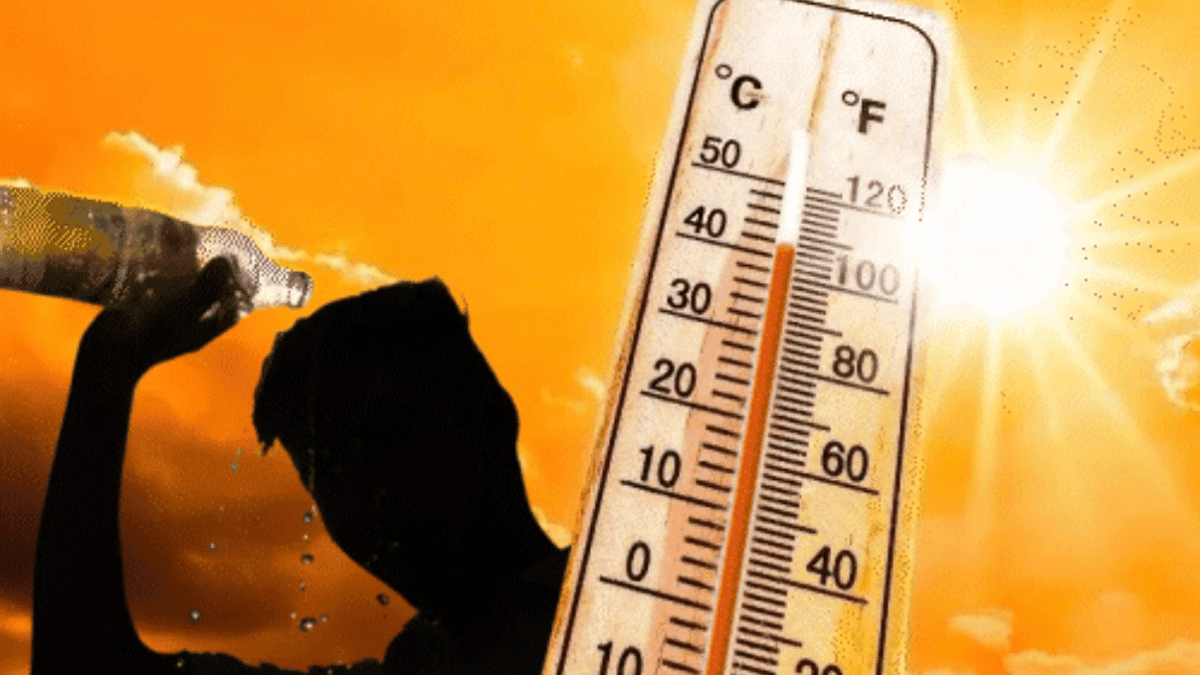
A brutal early summer heatwave has killed more than 1,300 people across Europe since June 21, shattered national temperature records from Spain to Poland, and prompted warnings from scientists that such extreme heat is now dramatically more frequent because of human-caused climate change. The death toll, confirmed by WHO Director-General Tedros Adhanom Ghebreyesus, came as between 150 and 191 million people endured temperatures above 35C, with the heat reaching levels never before recorded in several countries.
A Heat Dome Drives Temperatures to Historic Highs
The Europe heatwave originated in the Iberian peninsula before pushing north and east across the continent, driven by a slow-moving high-pressure system commonly described as a heat dome, sustained by an omega block weather pattern, according to BBC World and Al Jazeera.
Germany broke its all-time temperature record on three consecutive days. A provisional reading of 41.3C in Saarbrücken on Friday gave way to 41.5C at Möckern-Drewitz in Saxony-Anhalt on Saturday, and then 41.7C in Coschen near the Polish border on Sunday, according to Germany’s Meteorological Service. Poland smashed a record that had stood since 1921, reaching 40.5C in Słubice on Sunday. The Czech Republic topped 41C at Doksany, also setting a new national record. Denmark recorded a provisional all-time high of 37C near Aarhus, exceeding a mark set in 1976, while Switzerland posted its hottest June day for the third consecutive day with 39C in Basel. Belgium recorded an unofficial 40C, the Netherlands hit 39.4C in Limburg, and the UK reached a provisional June record of 37.1C in Suffolk.
Spain, where the heat was most intense earliest, registered 45.1C in Andújar, its highest June temperature on record. France saw 44C in one town, the country’s hottest June reading ever. Hungary, Slovakia, Serbia, Croatia, Italy, Austria and western Ukraine were also affected.
Toll Falls Hardest on the Elderly
France has borne the heaviest documented burden. Santé publique France, the country’s public health agency, reported approximately 1,000 excess deaths since June 24, with roughly 85 percent of victims aged 65 and older. Daily death totals on June 24 and the two days that followed exceeded 1,200 and 1,400 respectively, compared with a usual average of 900 to 1,000. Deaths at home rose by 40 percent, with the sharpest increases concentrated in Paris region departments placed under red heatwave warnings, which covered nearly three-quarters of mainland France.
Paris ambulance services recorded four times the normal rate of cardiac arrests over a single 24-hour period, according to French Health Minister Stéphanie Rist. Rist also warned that the impact of the heatwave could linger for up to 10 days. Paris police chief Patrice Faure said, “We are reaching a saturation point in hospital facilities.” French Prime Minister Sébastien Lecornu raised the national health alert to its highest level and activated the third tier of the Orsan emergency plan to boost hospital staffing.
Spain’s MoMo monitoring system recorded 327 heat-linked deaths between Sunday and Thursday. At least 74 people drowned in France since the heatwave began, most in unsupervised rivers, lakes and ponds, according to French Interior Minister Laurent Nuñez. Seven more people died in swimming accidents in Germany over the weekend. Three young children, including an 18-month-old in Marseille, died after being left in hot cars in France.
Tedros said heat stress is often called the “silent killer,” adding that European homes, workplaces and schools were not built for these temperatures. WHO data showed the phenomenon of a once-in-a-generation heatwave is now occurring nearly annually.
Infrastructure Buckles Under the Heat
The extreme temperatures strained energy and transport systems across the continent. Switzerland’s Beznau nuclear power plant took both reactors offline after the River Aare reached 25C, deemed too warm to safely cool the reactors. Three nuclear plants in France also went offline because of the heat. A Eurostar service from Cologne to Paris broke down east of Brussels with around 400 passengers on board, and three people were taken to hospital as a precaution, according to the Belga news agency. More than 600 passengers were evacuated from an overheated train between Hamburg and Prague after storms downed power lines, while tram services in Leipzig were suspended due to heat-damaged tracks.
Wildfires broke out in eastern and southwestern Germany, including in forests contaminated with unexploded World War II ammunition, forcing around 650 residents to evacuate the village of Traisen. A forest fire northeast of Barcelona forced 16,000 people to shelter in their homes on Friday, and a man was arrested on suspicion of arson.
German overnight temperatures in Kubschütz did not fall below 29.4C on Saturday, the warmest night since records began almost 150 years ago, according to the German weather service DWD. Berlin police deployed water cannons near the Brandenburg Gate to cool residents and tourists as emergency calls surged.
The heat cancelled or disrupted numerous public events. Paris Pride was cancelled with organisers looking at a September rescheduling, and the Solidays music festival at Longchamp was also called off. The Dutch music festival Defqon.1 was shut down after an unprecedented code red heat warning, prompting an angry reaction from attendees and a police response. Hamburg’s Half Marathon was among several events cancelled in Germany. Paris imposed bans on public alcohol consumption across parts of the weekend. The Diamond League athletics meeting in Paris went ahead but with an adapted format and a later start time.
Lightning struck the Eiffel Tower on Saturday evening as storms swept through Paris. Denmark recorded more than 1,100 lightning strikes after setting temperature records the previous day. Lightning also struck a Swedish amusement park, injuring several people.
Scientists Warn of a Climate-Changed Future
World Weather Attribution scientists said the heatwave would have been virtually impossible without human-caused climate change and that such conditions are now about 200 times more likely than they were two decades ago. The Copernicus climate service has established that Europe is the world’s fastest-warming continent, heating at twice the global average.
UN climate change chief Simon Stiell said the heatwave “has the fingerprints of the climate crisis all over it” and called for a faster shift to renewables. The World Meteorological Organization warned of major impacts to health, ecosystems, agriculture and labour. A Zurich glacier research team cautioned that almost all winter reserves on glaciers were on the verge of running out, weeks ahead of the usual August timeline, in a situation approaching the severity of 2022 when six percent of Swiss glacier mass was lost in a single year.
BBC weather forecaster Ben Rich said temperatures above 40C remained possible through Monday before cooler conditions were expected to push east later in the week. WMO spokeswoman Clare Nullis offered a sobering assessment of what lies ahead: “We need to get used to it, unfortunately.”