
The US military struck an alleged drug trafficking boat in the eastern Pacific Ocean on Sunday, killing at least two people and raising fresh questions about the legality and effectiveness of an ongoing naval campaign against Latin American cartels. The attack brings the total number of vessels hit to more than 60 since Operation Southern Spear began in September, with more than 210 people killed across the operation.
Sunday’s Strike and What SOUTHCOM Said
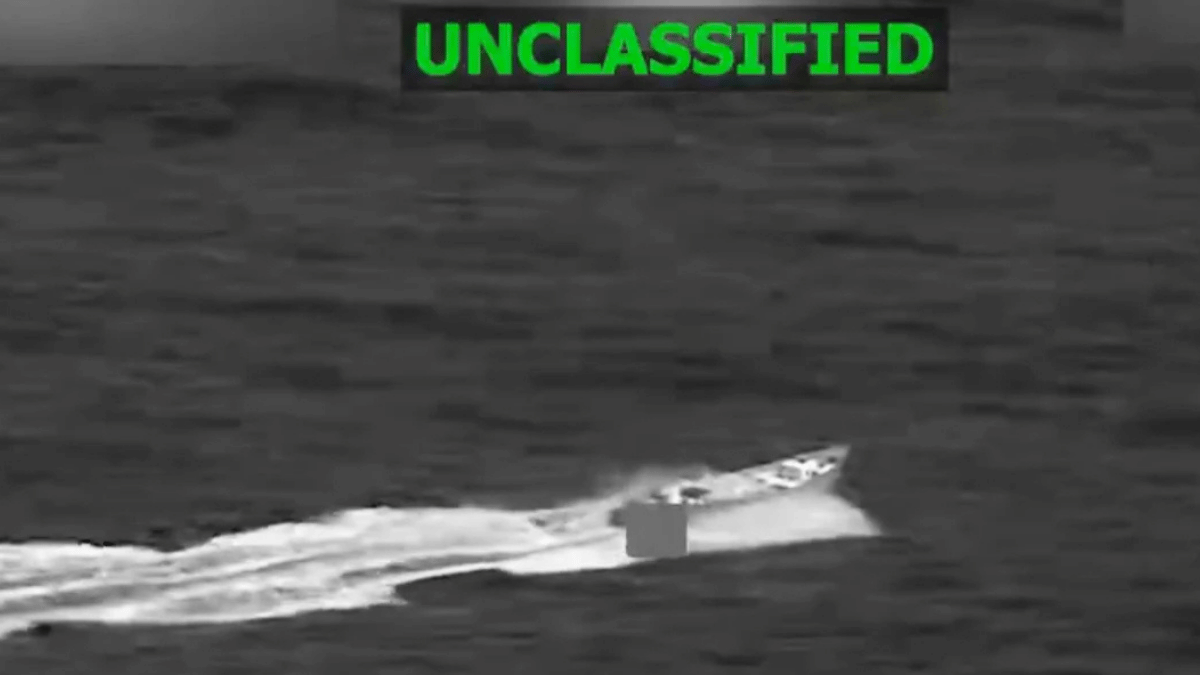
US Southern Command posted on X on Monday that the targeted vessel was operating along a known drug-smuggling route, though it provided no evidence the boat was actually carrying narcotics. SOUTHCOM said it notified the US Coast Guard about six male survivors but offered no details on their rescue or current condition.
The command released grainy black-and-white video alongside its post, showing the boat struck by a projectile and engulfed in a large explosion.
A Pattern of Unanswered Questions
Sunday’s strike is not an isolated incident raising concern. On June 16, US Central Command said it had notified the Coast Guard after two survivors were reported from a separate strike, but the Coast Guard later suspended its search after finding no signs of survivors or debris.
More troubling, US lawmakers on Thursday demanded the Pentagon release unedited footage of the operation’s very first strike after reports surfaced that American forces had conducted a follow-up attack on survivors clinging to wreckage. According to reporting by Al Jazeera, two men survived the initial attack that killed nine others, only to be killed when the vessel was struck a second time. The White House confirmed the follow-up strike took place, saying it was carried out “in self-defence” to ensure the boat was destroyed and in accordance with the laws of armed conflict.
Some legal scholars pushed back sharply, saying a second strike targeting survivors would be illegal under any circumstances, whether or not the US considers itself in an armed conflict.
Trump’s Justification and Its Critics
President Donald Trump has described the United States as being in an “armed conflict” with Latin American cartels and framed the maritime strikes as a necessary response to drug overdoses killing Americans. The administration has leaned heavily on that framing to justify the use of lethal force at sea.
Critics, however, have questioned how much strategic value the campaign actually delivers. Most fentanyl reaching the United States is smuggled overland from Mexico, not by sea, making the targeted boats a small fraction of the overall supply chain.
Pentagon Review Underway, Legality Excluded
The Pentagon’s inspector general announced in May that it would review whether the military followed standard targeting procedures during Operation Southern Spear. However, the office said the evaluation would not examine whether the strikes themselves are legal, a limitation that critics and legal scholars say leaves the most consequential questions unaddressed.