

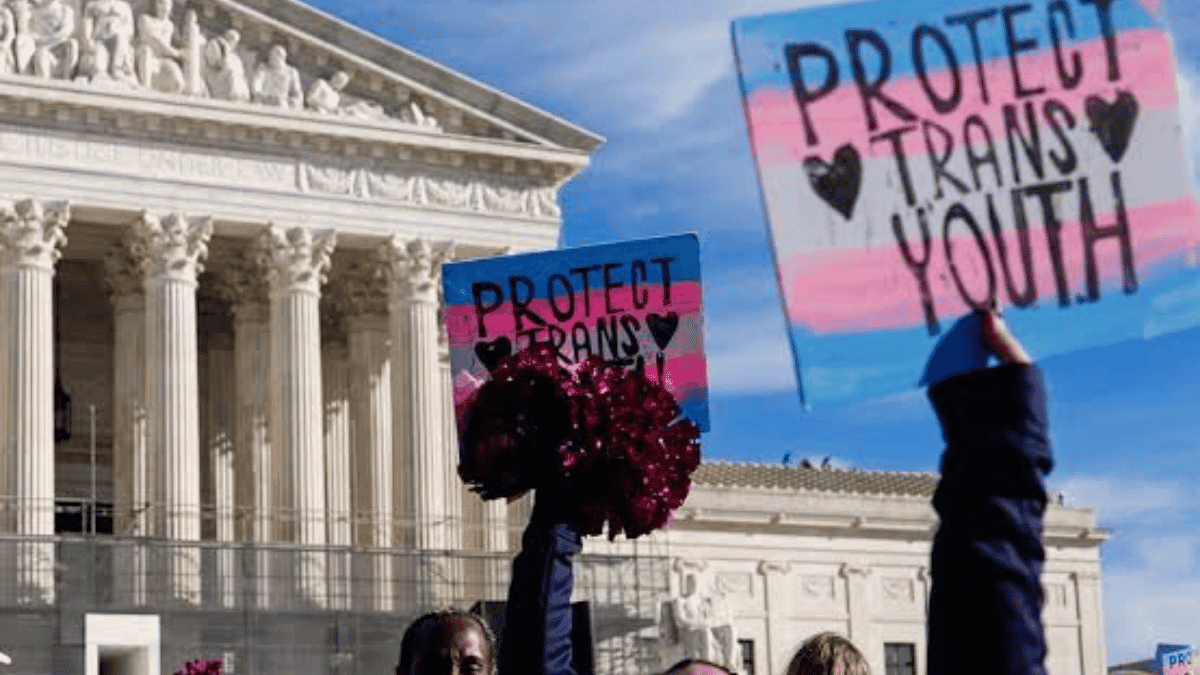
The US Supreme Court has ruled that states may prohibit transgender women from competing in female school and college sports, delivering a landmark decision that affects athletes across the country and settles a legal dispute that has divided courts and lawmakers for years.
The court considered challenges originating from Idaho and West Virginia, both of which passed laws requiring public school and college sports teams to compete according to the sex recorded at birth. One challenge argued those bans violate equal rights protections under the US Constitution, while the other contended they contradict federal civil rights laws, according to BBC World.
A Unanimous and a Divided Court
All nine justices agreed that state transgender sports bans do not violate Title IX, the civil rights law that prohibits sex-based discrimination in schools. However, the court split along ideological lines on the constitutional question: the six conservative justices held that the bans also do not violate the 14th Amendment’s equal protection guarantee, while the three liberal justices dissented on that point. Also Read American Traveller Says America Needs to Learn from India After Mumbai Metro Experience Goes Viral
Justice Brett Kavanaugh authored the majority ruling. “The Constitution and Title IX do not require an overhaul of women’s and girls’ sports throughout America,” he wrote. Justice Sonia Sotomayor filed a partial dissent, arguing the majority had applied a diminished view of equal protection when it came to sports.
The Idaho Case at the Center
The Idaho challenge was brought by Lindsay Hecox, a long-distance runner, shortly after Idaho enacted its ban in 2020. Both a district court and an appeals court had previously granted her injunctions blocking the law. A three-judge appeals court panel had also found the Idaho law violated constitutional rights, ruling the state failed to demonstrate the ban protects sex equality and opportunity for women athletes. The Supreme Court’s ruling now overturns that finding.
Idaho state lawmaker Barbara Ehardt, who introduced the Idaho law, welcomed the outcome. “Boys and men will not be able to take the place of girls and women in sports because it’s not fair,” she said.
A Shifting Landscape for Transgender Athletes
More than two dozen states have enacted transgender sports bans since Idaho became the first to do so in 2020. The Supreme Court ruling effectively upholds those laws and clears the path for others.
President Donald Trump made the issue of transgender athletes in women’s sports a regular focus of his 2024 election campaign and signed an executive order aimed at banning transgender women from competing on female sports teams. Following that order, the NCAA banned transgender women from competing in women’s college sports. Also Read US Military Strike on Drug Trafficking Boat Kills Two in Eastern Pacific as Operation Southern Spear Draws Legal Scrutiny
The decision also comes as international sports bodies reassess their own policies. In March, the International Olympic Committee announced it would limit the women’s category of Olympic sports to biological females. The IOC cited a working group’s review of 18 months of scientific evidence concluding that male sex provides a performance advantage in sports that rely on strength, power, and physical resistance.