
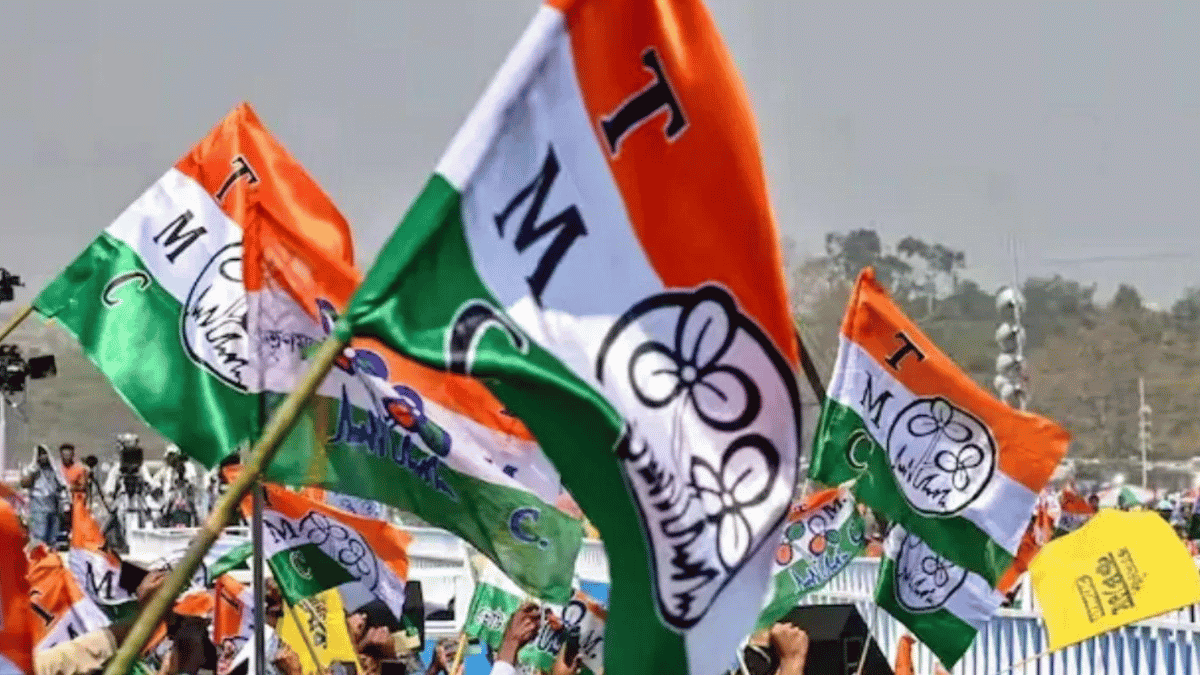
Twenty rebel Trinamool Congress Lok Sabha MPs met Speaker Om Birla on Monday, informing him they had merged with the Nationalist Citizens Party of India, a little-known registered but unrecognised party, and would henceforth support the ruling NDA. The move, which the rebels say covers more than two-thirds of TMC’s 28-member parliamentary strength, sets the stage for a landmark anti-defection showdown and dramatically accelerates the collapse of Mamata Banerjee’s political authority following her party’s defeat in the West Bengal Assembly elections.
The Rebel Camp and Its Key Figures
Barasat MP Kakoli Ghosh Dastidar, 66, led the group to the Speaker’s chamber. A three-term MP who held Barasat since 2009 and defeated her BJP rival by over 1.14 lakh votes in 2024, Ghosh Dastidar had been appointed TMC’s chief whip in August 2025 before being replaced by Kalyan Banerjee after the party’s assembly poll defeat. Her ties with Mamata Banerjee stretch back to 1984, when Mamata first contested a Lok Sabha election. “Two-thirds of the TMC’s MPs have given a letter to the Speaker for a separate seating arrangement. We will merge with the Nationalist Citizens Party and support the NDA,” she said.
Sudip Bandyopadhyay, 77, a veteran parliamentarian and one of the 20 rebels, was until recently leader of the TMC Parliamentary Party before being replaced by Abhishek Banerjee last August. He has a complicated history with the party, having left TMC in 2004, won a 2006 Bengal Assembly seat on a Congress ticket, and returned to the fold in 2008. He was arrested by the CBI in January 2017 in connection with the Rose Valley chit fund case; the Orissa High Court granted him conditional bail in May 2017 and the matter remains pending. TMC MP Mahua Moitra alleged Bandyopadhyay had falsely claimed to be hospitalised in Kolkata when he was seen in Delhi at Union Minister Bhupendra Yadav’s residence. Bandyopadhyay acknowledged meeting Home Minister Amit Shah for nearly 70 minutes. “In July, when Parliament restarts, we will make a demand to give us Trinamool since we have two-thirds majority,” he said.
The Party They Claim to Have Merged With
The NCPI, the vehicle the rebels chose for their merger, is a registered but unrecognised party with the Election Commission, carrying the symbol of a pen nib with seven rays. It was registered in 2022 and lists its office in Hatgacha, Howrah district. Its electoral record is minimal: it contested two seats in the 2023 Tripura Assembly elections and collected a combined 822 votes, and fielded 11 candidates in panchayat polls, all of whom lost.
Crucially, the party’s own office-bearers appeared unaware of the merger. Its president Shewly Kundu told reporters she had already resigned and did not know who had replaced her. Organisational general secretary Shantanu Dey said there was no internal party discussion about absorbing the rebel MPs, while another general secretary, advocate Dilip Roy, said the party only learned of the development through social media. Ghosh Dastidar later claimed NCPI had formally agreed to accept the dissidents and named Jyotiprakash Chatterji as the party’s new president. She also said the rebel group could grow from 20 to 22 MPs.
The Anti-Defection Legal Fight
The rebels’ strategy is built around Paragraph 4 of the Tenth Schedule of the Constitution, which shields members from disqualification when their original political party merges with another, provided at least two-thirds of the legislature party agrees. By claiming 20 of 28 TMC MPs, they argue they satisfy that threshold.
The Mamata faction moved quickly to counter them. TMC national general secretary Abhishek Banerjee, in a letter dated June 10 to Speaker Birla, argued that a valid merger requires both the political party itself to merge and two-thirds of the legislature party to concur, calling this a mandatory twin test. He cited a 2023 Supreme Court Constitution Bench ruling in the Maharashtra political crisis, which held that the political party, not the legislature party, appoints the Whip and issues voting directions. Mamata Banerjee’s faction separately urged the Speaker not to accord recognition, status, or facilities to any purported separate group.
Abhishek Banerjee could not meet the Speaker on Monday in person because he was being questioned by the Enforcement Directorate in Kolkata in connection with the school job scam probe until around 11 pm. TMC MP Kirti Azad met Speaker Birla around 3:30 pm to convey the party’s position in his absence.
Rajya Sabha MP and Senior Advocate Kapil Sibal was blunt in his assessment. “The rebels of the TMC legislative party cannot merge with a political party; that can happen only if the TMC wished to do so,” he said, calling the situation a “theatre of the absurd” and demanding the rebel MPs be disqualified. Former Lok Sabha secretary-general P D T Achary agreed, arguing the same legal point. The rebel camp, however, cited a 2022 Goa Bench of the Bombay High Court verdict upholding a similar merger of legislature parties into the BJP in 2019. PRS Legislative Research head Chakshu Roy noted that the Supreme Court has yet to deliver a final ruling on the merger provisions of the anti-defection law. Speaker Birla confirmed he would hear both sides before deciding on TMC’s status in the House.
West Bengal Assembly Rebels and the Broader Picture
The parliamentary revolt mirrors an equally significant rupture in the West Bengal Assembly. Approximately 60 of TMC’s 80 MLAs revolted against the party leadership following BJP’s victory in the state. Assembly Speaker Rathindra Bose recognised Ritabrata Banerjee, MLA from Uluberia Purba, as Leader of the Opposition after Banerjee submitted a letter bearing the signatures of 58 MLAs, with the total eventually expected to reach 67-68. Banerjee said the rebel legislators would function as the Opposition to the BJP in Bengal, while the rebel MPs align with the NDA in the Lok Sabha. He also said the rebel group had written to Mamata Banerjee requesting she serve as chief adviser, and that the faction planned to take control of municipalities, corporations, and Zilla Parishads. Banerjee attributed part of the party’s disintegration to political consultancy I-PAC, describing it as having “hijacked” a grassroots organisation.
The immediate trigger for the collapse was Mamata Banerjee’s own defeat in the Bhabanipur assembly seat, where she lost to BJP’s Suvendu Adhikari by 15,105 votes in counting held on May 4. Adhikari subsequently became West Bengal’s first BJP Chief Minister. Mamata filed an election petition before the Calcutta High Court on Tuesday challenging the result.
The TMC split echoes a string of similar political ruptures. In April, seven of AAP’s 10 Rajya Sabha MPs crossed over to the BJP in a comparable merger claim. The 2022 Shiv Sena split resulted in the Election Commission recognising the Eknath Shinde faction as the real party in February 2023, while the 2023 NCP split ended with the EC giving the party name and clock symbol to the Ajit Pawar faction in February 2024. Ajit Pawar has since died in an aircrash, which halted a potential reunification of NCP MPs. Reports also indicate the BJP is holding quiet consultations with the DMK, which holds 22 Lok Sabha seats. Meanwhile, the Congress convened its first INDIA bloc meeting in two years on June 8, with Mamata Banerjee in attendance.